Illinois FHA Loan With Lower Barriers
We make the numbers in Illinois easy to understand. An Illinois FHA loan delivers a low 3.5% down payment, fair credit standards, and the steady support that turns hesitation into a closing date.

Guidance homeowners rely on
When it comes to decisions this important, most homeowners look for signals they can trust. Thousands of families just like yours have moved forward with clarity and confidence through guidance grounded in transparency, precision, and consistent results, reinforced by a strong reputation across trusted platforms throughout the web.



The Illinois FHA Loan You Can Trust
FHA loans in Illinois reach further than conventional financing can. The 3.5% down requirement, accessible credit standards from 580, and FHA insurance combine to bring Illinois homeownership within real working-family budgets.
Down Payment That Makes Sense
Illinois FHA loan down payment requirements are clear: 3.5% with credit 580+, 10% with credit 500-579. Either threshold beats conventional minimums for Illinois buyers with similar credit profiles.
Credit Underwriting That Helps
An Illinois FHA loan accepts credit scores conventional programs won't touch without strict overlays. The 580 FICO threshold opens Illinois buying to working buyers whose credit reflects real-life challenges fairly.
A Real Team for Real Buyers
Government backing on an Illinois FHA loan delivers more than just lower thresholds. Illinois buyers benefit from broader property eligibility, gift fund acceptance, seller credit allowances up to 6%, and consistent program rules.
Our Rates For You
FHA 30 Year Purchase
Rates and APR shown are based on a $350,000 loan amount, 850 credit score, primary residence, single family home, 75% loan to value ratio, and owner occupied property. Payment example assumes no other liens on the property and includes principal and interest only. Taxes, insurance, mortgage insurance, and escrow items are not included and will increase the actual payment. Rates, APR, and points are subject to change without notice and may vary based on credit profile, property type, occupancy, loan to value, loan amount, and other qualifying factors. Not all borrowers will qualify.
Where Illinois buying begins
Skip the Five-Year Save.
Renting in Illinois is fine until you do the math on what you've spent and what you own. An Illinois FHA loan changes that math by getting you to Illinois ownership on a near-term, working-buyer timeline.
Set Your Payment, Move Forward.
Illinois renters face annual lease renewals with potential rent increases. An Illinois FHA loan with a fixed rate offers 30 years of Illinois payment certainty, which beats annual Illinois rent negotiations meaningfully over time.
Accept Gift Funds for Closing.
Illinois buyers receiving family help for down payment use the FHA program because gift fund acceptance is straightforward. An Illinois FHA loan accepts the full 3.5% as gift, with simple documentation requirements throughout.

An Illinois FHA Loan, Demystified
Start With Honest Numbers.
Pre-approval on an Illinois FHA loan is a real underwriting review, not a soft check. We pull credit, verify income, confirm employment, and review assets at the depth that final Illinois FHA approval will use.
Shop Illinois Listings Confidently.
Your Illinois FHA loan pre-approval gives your Illinois home shopping real weight. The verified buying power directs your agent to Illinois listings within reach, and the pre-approval letter signals Illinois sellers that your offers will close cleanly.
Set the Final Loan Numbers.
After Illinois contract acceptance, the Illinois FHA loan moves into formal underwriting and FHA appraisal. Most Illinois FHA files clear all final conditions within 2-3 weeks of contract, with closing scheduling shortly afterward.
Close the Deal in Illinois.
Most Illinois FHA loans close within 30-45 days of contract acceptance. The closing finalizes the Illinois purchase: you sign at the closing table, the lender funds the Illinois FHA loan, and the title officially transfers to your name at recording.
Begin Your Illinois FHA Path Forward
Find out what your Illinois FHA loan numbers actually look like. We make the math clear, the timeline realistic, and the conversation pressure-free throughout the process.

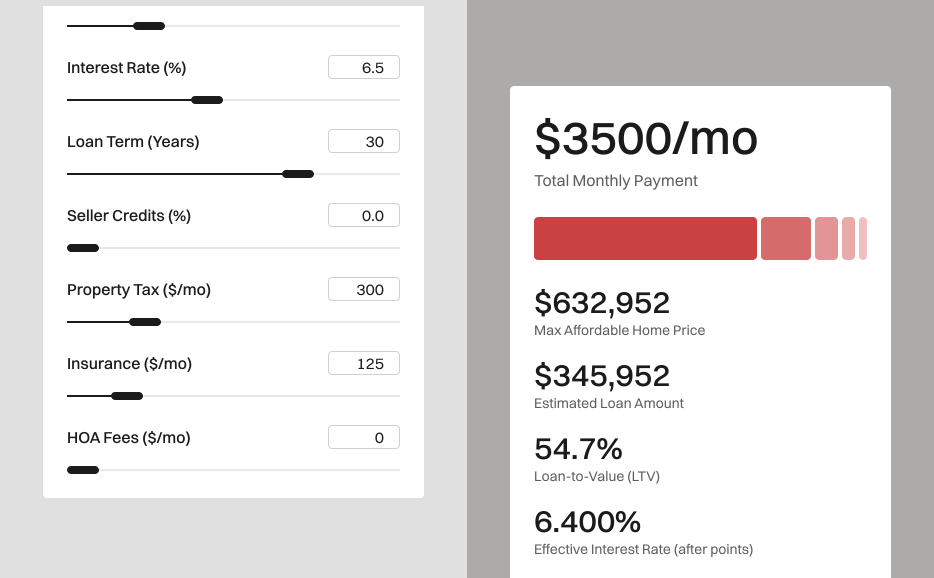
See how much home you can afford
Before you spend Saturday touring houses, spend two minutes getting honest numbers. Enter your income, estimated credit range, and the counties you want. See the FHA loan limit for that area, your estimated monthly payment with taxes and insurance, and how your down payment changes cash to close. If assistance programs apply, they appear in the estimate with simple rules attached. You will know your range before a listing steals your heart.
Real people. Real challenges. Real mortgage success.
What if answers changed everything you feared?
Still unsure? Talk to someone who hears you, not a script.
The best mortgage depends on your financial goals, budget, and future plans. First-time buyers often compare FHA or conventional loans, while veterans may qualify for VA mortgage programs. A trusted lender will guide you through options, showing which mortgage fits your income, credit, and long-term goals.
Waiting for lower mortgage rates can feel tempting, but timing the market is unpredictable. A smart approach is to apply when a mortgage fits your budget and goals today. You can always refinance later if rates improve, ensuring you do not miss opportunities to move forward.
Yes. A mortgage refinance or cash-out option can help consolidate high-interest debt and lower overall payments. By using your home’s equity, the right mortgage strategy may free up monthly cash flow, reduce financial stress, and create more room in your budget for future goals.
A mortgage pre-approval is a lender’s review of your income, credit, and debts to estimate how much you can borrow. It shows sellers you are a serious buyer and gives you a clear budget range. Pre-approval strengthens your position and makes the mortgage process smoother from the start.
The amount of mortgage you can afford depends on your income, debts, credit, and lifestyle goals. Lenders often suggest keeping your mortgage payment within 28 to 31 percent of monthly income. Using a mortgage calculator helps estimate payments and gives a clearer picture of what fits your budget.
Yes. You can switch mortgage lenders during the process if you feel communication or support is lacking. While it may cause delays, a better mortgage experience can save stress and money long term. Always review fees and timelines before moving your application to a new mortgage lender.
Yes! You can qualify for a mortgage if you are self-employed or earn variable income, but lenders may require extra documentation. Bank statements, tax returns, and proof of steady cash flow help show stability. With the right mortgage program, self-employed borrowers can secure financing confidently.
The latest from Oxford




Still have a question?
No problem. Let’s just talk.


About Oxford
Refinance Loan
Resources & Calculators
Hire
Advertised offers are not guaranteed if you do not continue to meet Oxford Home Lending's criteria and other factors bearing on your creditworthiness. Rates will vary depending on your loan term, loan type, credit profile & score, down payment, qualifying ratios, and property collateral. Monthly payments do not include property taxes, property insurance, and homeowners' association dues. Since costs can vary based on a loan program, closing costs are not shown in the examples. To qualify for a mortgage, borrowers must be U.S. citizens or permanent residents, and meet Oxford Home Lending's underwriting and Investor requirements. Interest rate examples are as of 03/03/2026 and subject to change without notice. All loans are subject to underwriting or investor approval. Other restrictions may apply. This is not an offer of credit or a commitment to lend. Rate subject to change depending on time of lock.
Lower, LLC DBA Oxford Home Lending | NMLS #1124061 | www.nmlsconsumeraccess.com.
Lower, LLC | NMLS ID# 1124061 | 5950 Symphony Woods Road Suite 312 Columbia, MD 21044 | Equal Housing Opportunity | https://nmlsconsumeraccess.org/ | Not an offer of credit or commitment to make a loan; all approvals are subject to underwriting guidelines including but not limited to acceptable current credit worthiness, income history, debt ratio, etc. Loan programs & options are subject to change at any time. Rates will vary depending on your loan term, loan type, credit profile, down payment, and qualifying ratios. Rates can change daily. Some restrictions may apply. No statement herein should be construed as being made on behalf of any state or federal agency.
© 2026 Lower, LLC | Conducts business in 47 States to include the District of Columbia. Alabama, Alaska, Arizona - License #1000936, Arkansas, California, Colorado, Connecticut, Delaware, District of Columbia, Florida, Georgia, Idaho, Illinois, Indiana, Iowa, Kansas, Kentucky (Lower.com, LLC), Louisiana, Maine, Maryland, Massachusetts Mortgage Broker License -- MC1124061 | Massachusetts Mortgage Lender License -- MC1124061, Michigan, Minnesota, Mississippi, Missouri, Montana (Lower.com, LLC), Nebraska, New Hampshire, New Jersey, New Mexico, Nevada, North Carolina, North Dakota, Ohio, Oklahoma (Lower Mortgage, LLC), Oregon, Pennsylvania, Rhode Island, South Carolina, South Dakota, Tennessee, Texas, Utah, Virginia, Washington (Lower.com, LLC), West Virginia, Wisconsin, and Wyoming.
Refinance: By refinancing your existing loan, your total finance charge may be higher over the life of the loan.
Reviews: Zillow® is a trademark of Zillow, Inc. Bankrate® is a trademark of Bankrate, LLC. Lending Tree® is a trademark of Lending Tree, LLC. Google® is a trademark of Google LLC. Facebook® is a trademark of Facebook, Inc.