Connecticut USDA Loan Built for the Eligible Rural Pockets
Most of Connecticut sits inside excluded metros. A Connecticut USDA Loan only fits in specific eligible pockets. We map honestly first, then build the zero down structure around your income and the rural property you actually want.
Guidance homeowners rely on
When it comes to decisions this important, most homeowners look for signals they can trust. Thousands of families just like yours have moved forward with clarity and confidence through guidance grounded in transparency, precision, and consistent results, reinforced by a strong reputation across trusted platforms throughout the web.




What Connecticut Buyers Need to Know About USDA Eligibility
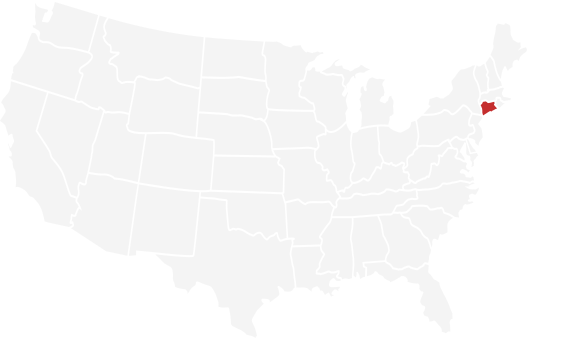
USDA eligibility in Connecticut is narrow. Most of the state sits inside excluded metros around Hartford, New Haven, Bridgeport, and Stamford. Eligible pockets exist in the rural eastern and northwestern corners. Income limits run around 115 percent of area median income, which Connecticut adjusts upward for cost of living. We pull the actual eligibility map and run your income calculation honestly before recommending any home.
Our Rates For You
USDA 30 Year Purchase
Rates and APR shown are based on a $350,000 loan amount, 850 credit score, primary residence, single family home, 75% loan to value ratio, and owner occupied property. Payment example assumes no other liens on the property and includes principal and interest only. Taxes, insurance, mortgage insurance, and escrow items are not included and will increase the actual payment. Rates, APR, and points are subject to change without notice and may vary based on credit profile, property type, occupancy, loan to value, loan amount, and other qualifying factors. Not all borrowers will qualify.
What Makes a Connecticut USDA Loan Worth Pursuing
Three things make a USDA loan worth pursuing for Connecticut buyers who qualify on the narrow eligible geography and income. Zero down payment, modest fees relative to FHA, and rural pocket flexibility that fits the eligible eastern and northwestern Connecticut areas other products do not.
Zero Down on Eligible Pockets
USDA's zero down structure lets qualified Connecticut buyers skip the saving years most programs demand. In the limited eligible eastern and northwestern pockets, closing costs can often roll into seller credits, accelerating the path to keys.
Cheaper Than FHA in Connecticut
USDA's one percent upfront guarantee fee plus roughly 0.35 percent annual fee usually beats FHA's combined insurance costs over the life of a Connecticut loan. We model both honestly side by side.
Connecticut Pocket Map Expertise
USDA's geographic rules trip up generalist lenders, especially across Connecticut's narrow eligible footprint. We know the map cold, run your income math precisely, and stay your one advisor from the first call through closing.

Your Connecticut USDA Loan Path, Step by Step
USDA Loans compared with other mortgage loans
USDA
FHA
Conventional
VA
Real people. Real challenges. Real mortgage success.
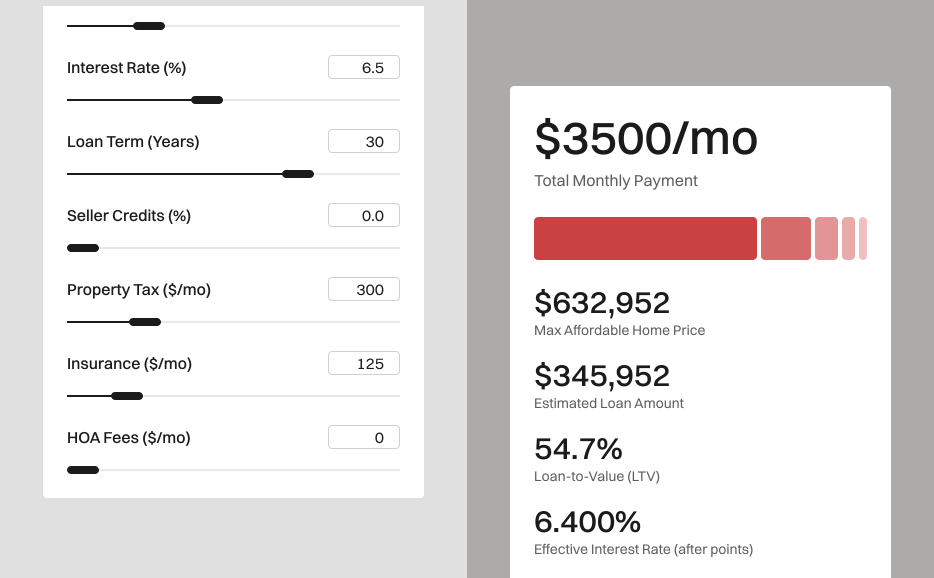
Affordability with a USDA loan.
Test different home prices, down payment amounts, and property taxes for your county to see what fits your budget. This USDA Loan calculator gives you a clear estimate of your potential payment so you can choose a number that feels comfortable before you start touring homes.
Connecticut USDA Loan Questions, Answered Honestly
Still unsure? Talk to someone who hears you, not a script.
USDA publishes an interactive eligibility map. We pull it for any specific Connecticut property address you are considering and confirm whether it falls inside the eligible boundary before you write an offer. Connecticut's eligible footprint is small, so this verification step is essential before any property commitment here.
USDA limits run roughly 115 percent of area median income, adjusted for household size and Connecticut cost of living. The cost adjustment lifts limits meaningfully here. We pull the exact figure for your specific town and household composition before any work moves forward, so you know honestly where you stand.
USDA wins on no down payment and lower long term fees compared to FHA, but only works in Connecticut's narrow eligible pockets. FHA fits across most of Connecticut where USDA does not, including Hartford, New Haven, and the Bridgeport corridor. We model both honestly before recommending one path here.
USDA charges a one percent upfront guarantee fee, typically rolled into the Connecticut loan amount, plus an annual fee of roughly 0.35 percent of the loan balance, paid monthly. Both are meaningfully lower than FHA mortgage insurance over the full life of a typical Connecticut loan we model honestly.
USDA condition standards run stricter than conventional. The Connecticut property must have a sound roof, working heating that handles Connecticut winters, safe water and septic, no peeling exterior paint, and no major structural issues. Common cosmetic items the seller can address before closing rather than after.
USDA itself sets no official minimum credit score, but most lenders want 640 or higher for automated approval through the Guaranteed Underwriting System. Below 640, your Connecticut file goes to manual underwriting, which works but requires more documentation around the story behind the score honestly. We walk you through both paths.
USDA closings in Connecticut typically run thirty to forty five days, longer than conventional or FHA. The reason is two stage approval: your lender underwrites first, then the file goes to the USDA office for a final review. We set that expectation honestly with you and your real estate agent up front from day one.
The latest from Oxford




Still have a question?
No problem. Let’s just talk.


About Oxford
Refinance Loan
Resources & Calculators
Hire
Advertised offers are not guaranteed if you do not continue to meet Oxford Home Lending's criteria and other factors bearing on your creditworthiness. Rates will vary depending on your loan term, loan type, credit profile & score, down payment, qualifying ratios, and property collateral. Monthly payments do not include property taxes, property insurance, and homeowners' association dues. Since costs can vary based on a loan program, closing costs are not shown in the examples. To qualify for a mortgage, borrowers must be U.S. citizens or permanent residents, and meet Oxford Home Lending's underwriting and Investor requirements. Interest rate examples are as of 03/03/2026 and subject to change without notice. All loans are subject to underwriting or investor approval. Other restrictions may apply. This is not an offer of credit or a commitment to lend. Rate subject to change depending on time of lock.
Lower, LLC DBA Oxford Home Lending | NMLS #1124061 | www.nmlsconsumeraccess.com.
Lower, LLC | NMLS ID# 1124061 | 5950 Symphony Woods Road Suite 312 Columbia, MD 21044 | Equal Housing Opportunity | https://nmlsconsumeraccess.org/ | Not an offer of credit or commitment to make a loan; all approvals are subject to underwriting guidelines including but not limited to acceptable current credit worthiness, income history, debt ratio, etc. Loan programs & options are subject to change at any time. Rates will vary depending on your loan term, loan type, credit profile, down payment, and qualifying ratios. Rates can change daily. Some restrictions may apply. No statement herein should be construed as being made on behalf of any state or federal agency.
© 2026 Lower, LLC | Conducts business in 47 States to include the District of Columbia. Alabama, Alaska, Arizona - License #1000936, Arkansas, California, Colorado, Connecticut, Delaware, District of Columbia, Florida, Georgia, Idaho, Illinois, Indiana, Iowa, Kansas, Kentucky (Lower.com, LLC), Louisiana, Maine, Maryland, Massachusetts Mortgage Broker License -- MC1124061 | Massachusetts Mortgage Lender License -- MC1124061, Michigan, Minnesota, Mississippi, Missouri, Montana (Lower.com, LLC), Nebraska, New Hampshire, New Jersey, New Mexico, Nevada, North Carolina, North Dakota, Ohio, Oklahoma (Lower Mortgage, LLC), Oregon, Pennsylvania, Rhode Island, South Carolina, South Dakota, Tennessee, Texas, Utah, Virginia, Washington (Lower.com, LLC), West Virginia, Wisconsin, and Wyoming.
Refinance: By refinancing your existing loan, your total finance charge may be higher over the life of the loan.
Reviews: Zillow® is a trademark of Zillow, Inc. Bankrate® is a trademark of Bankrate, LLC. Lending Tree® is a trademark of Lending Tree, LLC. Google® is a trademark of Google LLC. Facebook® is a trademark of Facebook, Inc.